Paint protection film (PPF) has become one of the most requested products in the automotive aftermarket, yet not all PPF is created equal. The three main material families — TPU, TPH and PVC — differ significantly in chemical structure, and those differences translate directly into performance, pricing and warranty risk for distributors.
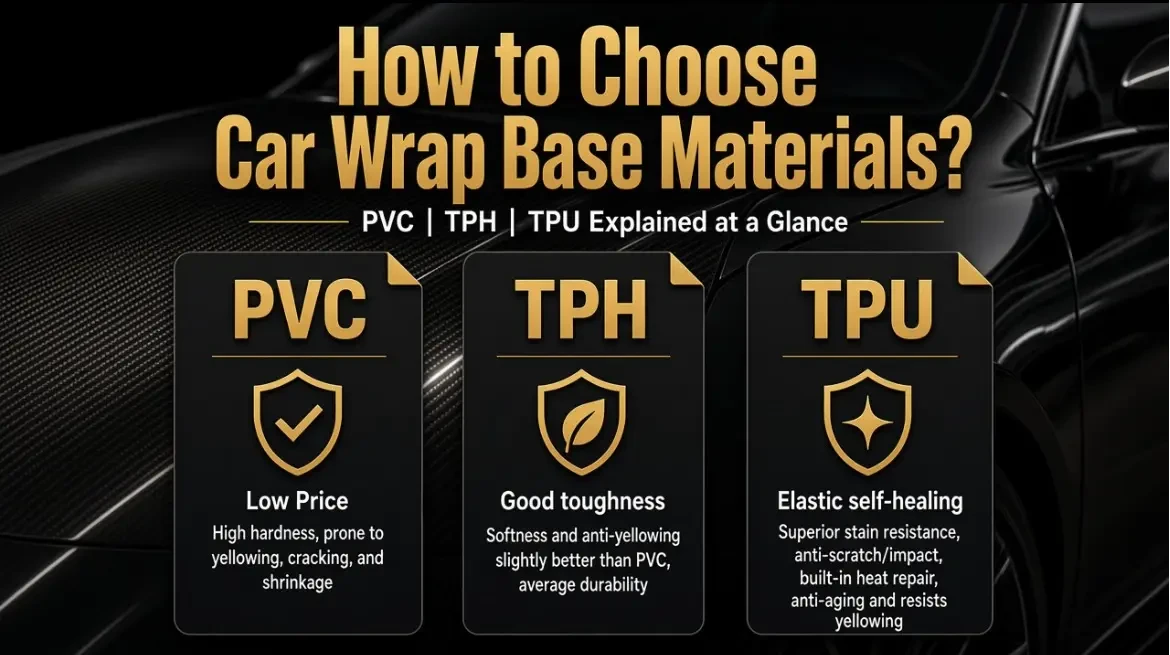
TPU (thermoplastic polyurethane) is the material of choice for premium PPF. It offers genuine self-healing properties, strong UV resistance and a service life of five to ten years under normal conditions. For distributors targeting high-end workshops and luxury car owners, TPU is the default recommendation because it minimizes after-sales complaints and supports longer warranty periods.
TPH sits between TPU and PVC in both cost and performance. It is essentially a PVC base modified with plasticizers to improve flexibility. TPH films are easier to install than rigid PVC and cost less than TPU, making them a practical option for mid-range markets. However, the plasticizers can migrate over time, which may lead to yellowing or edge lifting after two to three years in hot climates.
PVC film is the most affordable option and is still widely used in price-sensitive markets. It provides basic protection against stone chips and minor abrasions, but it lacks self-healing capability and tends to yellow faster under UV exposure. Distributors who stock PVC should set clear expectations with installers about its shorter service life and recommend it for budget-conscious customers or temporary protection scenarios.