
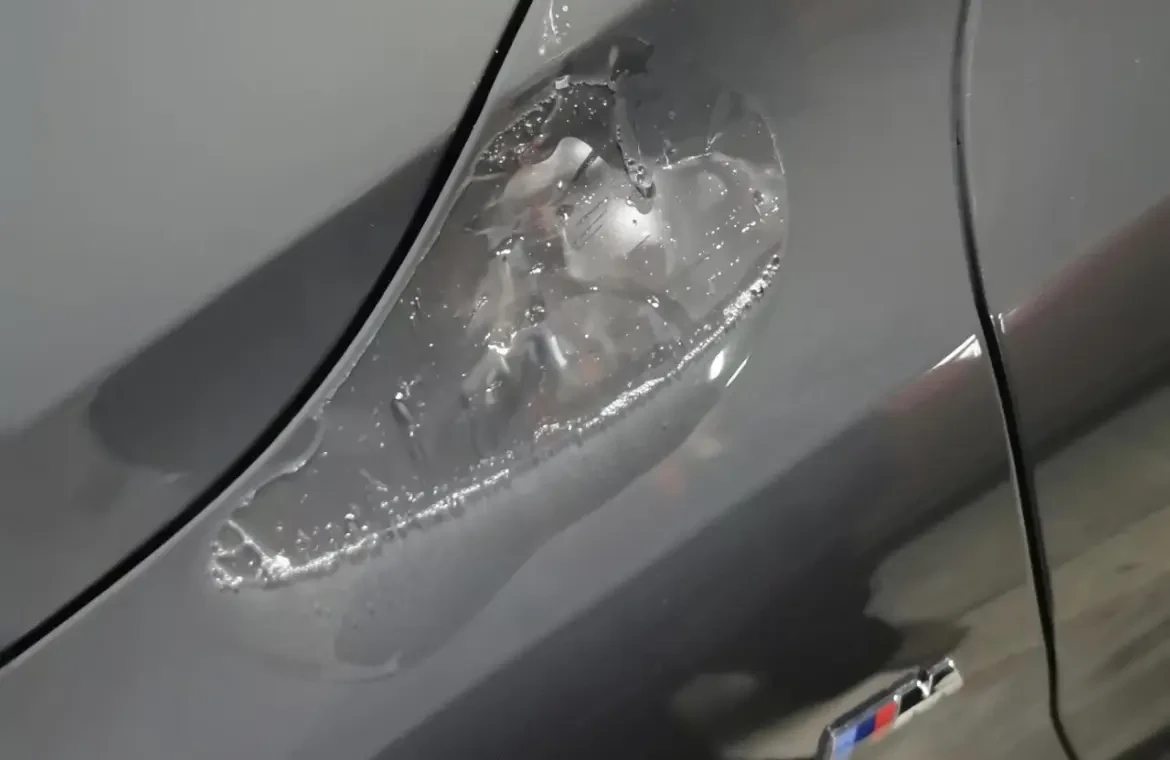
Paint protection film installation requires skill, patience and the right materials. Even experienced installers encounter issues like trapped air bubbles, edge lifting and contamination marks. While some of these problems stem from workshop conditions, others can be traced back to the film itself. Understanding the root causes helps distributors choose better products and provide more effective technical support to their installer network.
Air bubbles are the most common complaint during PPF installation. Small micro-bubbles that appear immediately after application are often caused by moisture trapped between the film adhesive and the paint surface. These typically dissipate within a few days as the adhesive cures. Larger persistent bubbles, however, usually indicate insufficient squeegee technique, contaminated surfaces or an adhesive layer that is too aggressive for the film thickness. Providing installers with clear application guidelines and recommended tools can significantly reduce this issue.
Edge lifting occurs when the film pulls away from the panel edge after installation. This can be caused by several factors: insufficient wrap-around during application, adhesive that has lost tack due to prolonged storage, or film that is too stiff to conform to complex curves. Films with a more flexible backing and a balanced adhesive formulation are less prone to edge lifting. Distributors should check the shelf life and storage conditions of their inventory, as heat exposure during shipping can degrade adhesive performance before the film even reaches the workshop.
Factories can support installers by providing detailed technical data sheets, application videos and pre-cut patterns for popular vehicle models. Some manufacturers also offer on-site training programs or remote technical support. Distributors who invest in this kind of installer education tend to see fewer warranty claims and stronger repeat orders. Building a feedback loop between installers and the factory also helps drive continuous product improvement.