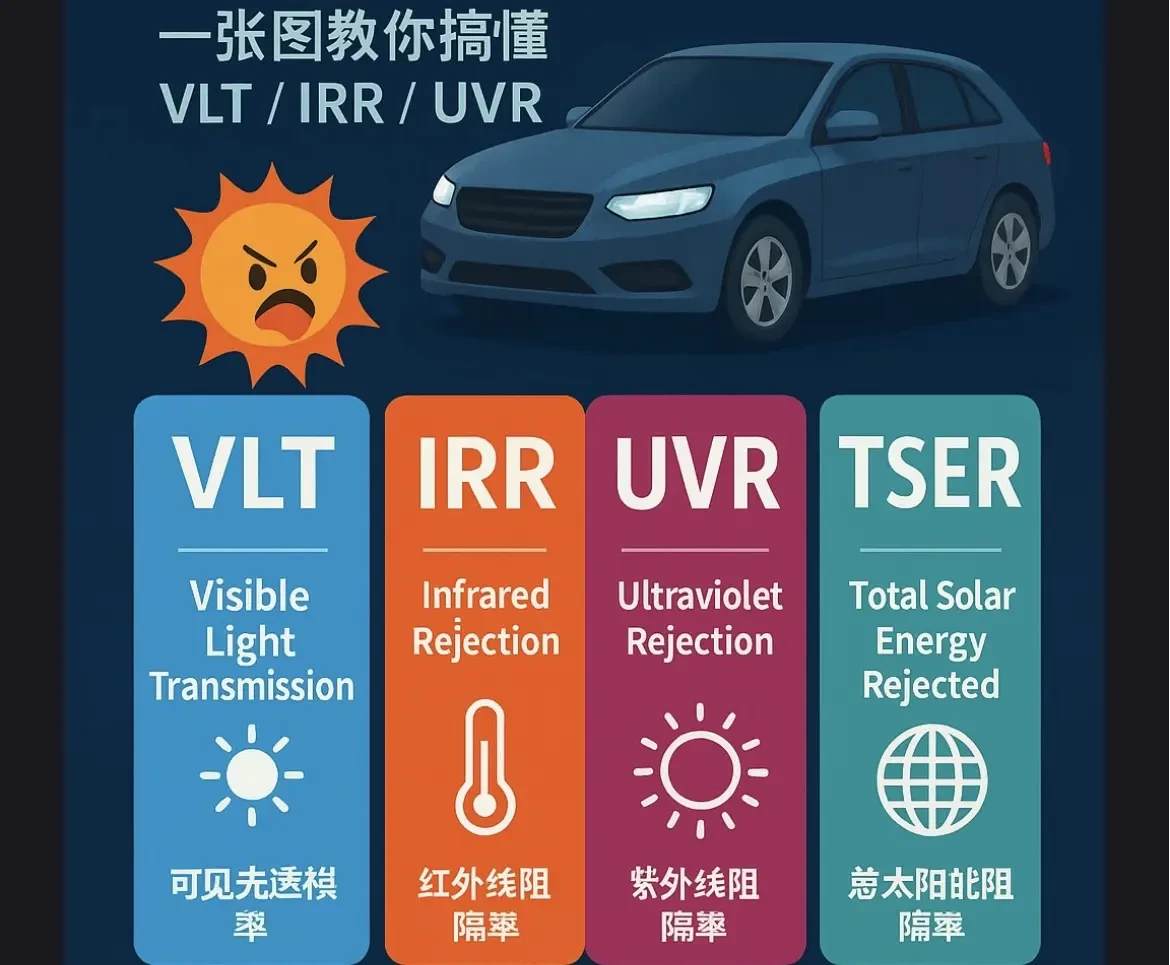

A window film datasheet is short, but the numbers on it are often compared incorrectly. Understanding what each figure describes makes supplier conversations shorter and customer explanations more accurate.
The three figures
- Visible light transmission (VLT) describes how much daylight passes through the film. It defines how dark the glass looks and where local tint rules apply.
- Infrared rejection (IRR) describes performance in a selected part of the infrared spectrum. It is a laboratory figure, useful for comparing films tested the same way.
- UV rejection describes how much ultraviolet radiation is filtered. It protects skin and interior materials, and is usually the highest figure on the sheet.

Where comparisons go wrong
IRR quoted for different wavelength bands cannot be compared directly, and total solar energy rejection depends on the whole construction rather than one number. VLT is the figure that decides whether an installation complies with local rules, so it belongs first in any customer conversation.
Explaining it simply
Most customers want to know how dark the glass will look, how much heat they will feel and whether their interior will fade. Map those questions to VLT, the film's heat performance and UV rejection, and leave laboratory detail in the datasheet where it belongs.
Our datasheets state the test basis for each figure, and we can provide full reports on request.