
Two films can both claim strong heat rejection and still perform differently on a car. The difference usually comes from how each was tested rather than from the quality of either film.
Where the variation comes from
- The wavelength band used for infrared measurement.
- Whether the figure describes the film alone or the film on a specific glass type.
- Whether the test reports rejection, transmission or absorption.
- Whether the result is measured at a single point or across the spectrum.

Reading a comparison
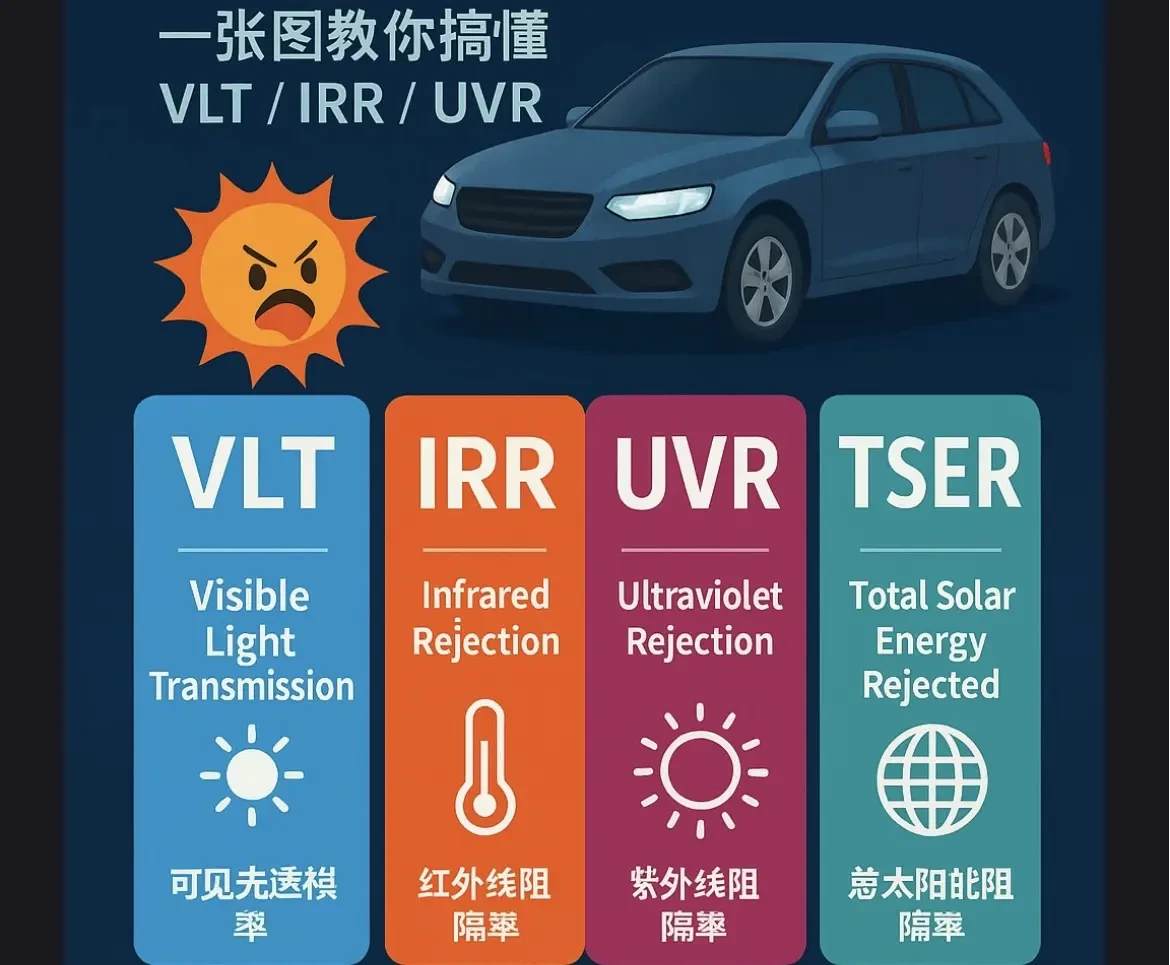
A meaningful comparison states the test basis and the glass used. Without those two pieces of information, two figures are not comparable even when they look similar. Total solar energy rejection, where available, is often the most useful single figure in a customer conversation.
Verifying in your workshop
A simple side-by-side test with a heat source and two panels gives an installer a practical read on how a film behaves, and it is often more persuasive to a customer than a datasheet. Keep the method consistent so results stay comparable over time.
We state the test basis for every figure on our datasheets and can provide full reports on request.